
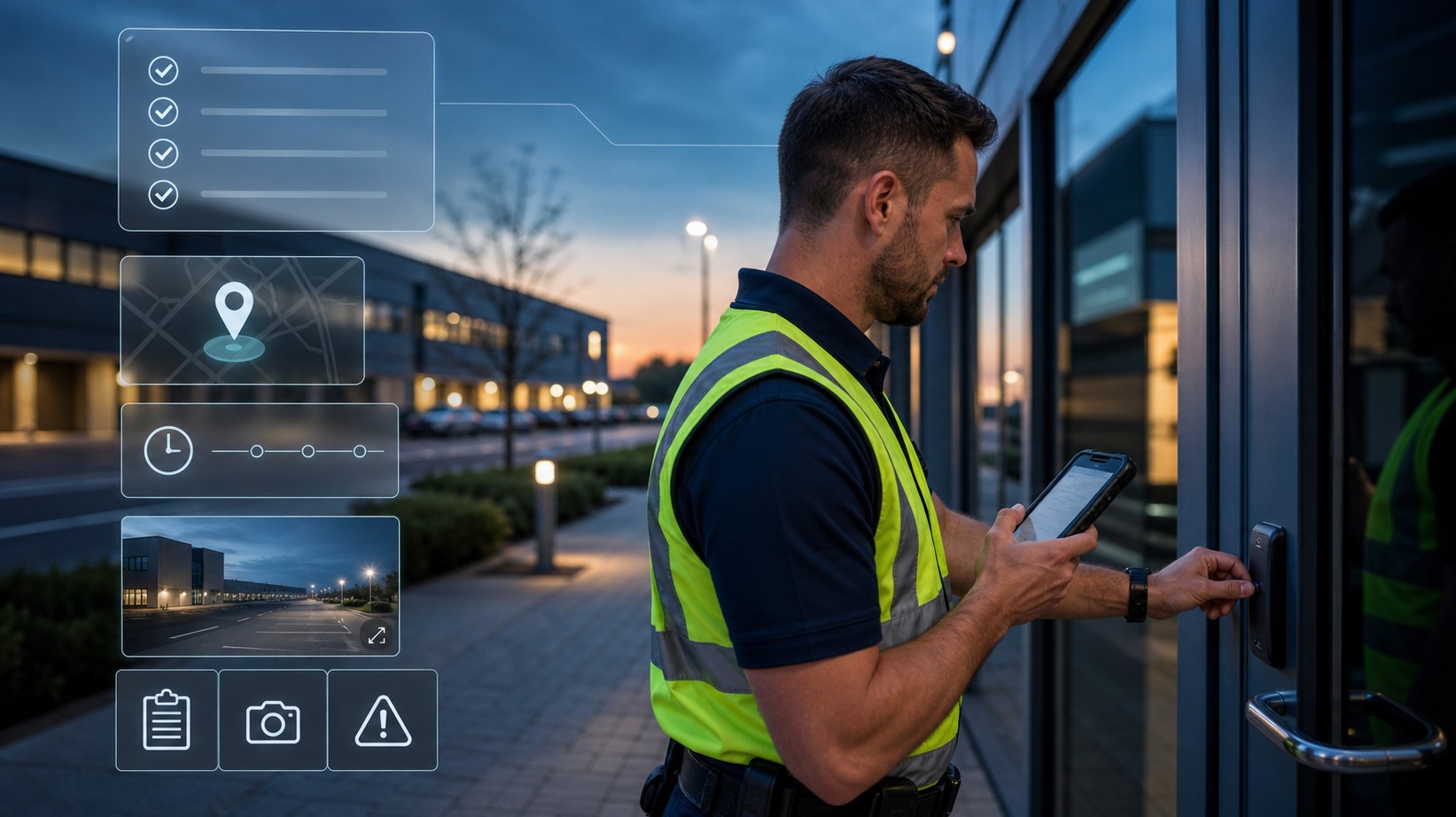
What a Useful Security Patrol Report Should Include
Property checked. Everything fine.” That entry tells a manager almost nothing. Which doors were checked? Did the officer inspect the loading area or drive past the front entrance? Was the damaged fence still open?
Mobile patrol security covers perimeter inspections, parking checks, lockup services, and alarm response. Reports written by security officers conducting scheduled property rounds should show which tasks were completed and what happened during each visit. A manager reading the report the next morning should understand what needs attention without calling the officer for an explanation.
A clear record of where the officer went
Every entry needs a date, time, and specific area. “Rear delivery gate checked at 11:42 p.m.” gives the reader something concrete. “Exterior inspected” leaves too much unanswered, particularly on properties with several buildings or separate parking areas.
GPS records add location data to patrol logs, but a vehicle’s position does not explain what the officer inspected. Reports should distinguish between a drive-through patrol and an inspection completed on foot. If a parked truck blocked access to a service door, record that limitation rather than marking the entire route complete.
Fun fact: A GPS point shows where a tracking device was recorded, not where its user was looking. An officer’s written observations explain what happened at that location.
The checks performed at each stop
A useful report names the work completed: exterior doors checked, gates secured, parking areas inspected, or unauthorized vehicles observed. Lockup and unlock services deserve their own entries, with the time and any exceptions recorded.
“Side entrance locked” differs from “side entrance found open and secured.” The second entry identifies a problem with the closing routine. When that happens repeatedly, managers have a reason to review employee access, door hardware, or the instructions given to the closing team.
Observations that separate facts from guesses
Patrol officers should describe what they saw without inventing an explanation. “Fresh damage visible around the lock” is more accurate than “someone tried to break in” when nobody witnessed an attempted entry.
The same rule applies to people and vehicles. Record observable behavior, the area involved, and what the officer did next. Someone standing beside a loading dock is different from someone testing several locked doors. Clear descriptions give managers enough detail to assess the incident without relying on vague labels.
Incident details when someone is injured
If an officer witnesses an employee’s injury or arrives afterward, the report should distinguish direct observations from statements made by the injured person or witnesses. Record the location, relevant conditions, people present, and immediate response without assigning blame or making a medical diagnosis. Preserve related photographs and timestamps through the property’s authorized reporting process. A patrol report adds information to the incident record; it does not replace medical documentation or determine entitlement to benefits. When a workplace injury claim is denied or disputed, a workers’ compensation attorney reviews the available records, prepares claim documents, and represents the injured employee in proceedings over benefits. The attorney also communicates with the insurer when pursuing overdue benefit checks. Accurate reporting gives that work a clearer factual starting point.
Photographs with enough context to be useful
A close-up of a broken latch shows the damage but often leaves the location unclear. Pair it with a wider image identifying the entrance, then add a short caption explaining what the officer found.
Photographs belong alongside written observations. An image of a puddle does not explain when it was discovered, whether the area was blocked off, or who received the maintenance notification. Follow property rules for taking and storing images, especially when people or restricted areas appear in the frame.
What happened after the problem was found
An alarm-response entry should record when the alert arrived, when the officer reached the property, what was checked, and who was contacted. If the officer found an unsecured gate, the report should state whether it was secured or remained open awaiting repairs.
Leave unresolved items visible for the next patrol. A damaged gate should not disappear into yesterday’s log while tonight’s officer starts without that information. Assign the repair to a named contact and record the temporary precautions. On the next visit, check the gate again and update its status. That follow-through turns a report into a working record of the property.