
Bring Your Product Ideas to Life With 3ERP Custom Part Services.
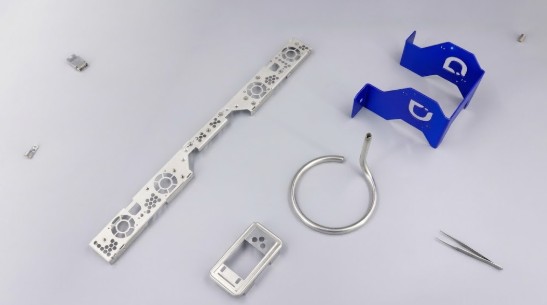
Designing a product is more than just a pretty face; it’s a functional physical component that can be developed from a product concept. Each component needs to satisfy its dimensional specifications, material properties, and performance requirements. But the conventional manufacturing process to develop components can take a lot of preparation and investment in tooling. Custom part services offer a viable path from digital designs to physical products. 3ERP’s combination of rapid prototyping, flexible manufacturing processes, and engineering expertise is helping to bring early concepts to life with accurate manufacturing.
1. Transforming Initial Concepts Into Physical Components
Every successful product starts with an idea which at some point must be physically validated. A digital drawing may convey dimensions, shapes, and relationships for assembly, but cannot completely describe how components will behave in the real world. Physical parts enable the designer to look at the proportions, interference issues, and whether or not the designer’s idea will function.
This makes this transition more manageable with the help of custom manufacturing, which transforms CAD designs into real parts. Engineers can choose appropriate production processes based on geometry, material requirements, tolerances, and applications. Developers can produce single parts or small quantities rather than signing up to costly production tooling. This helps to explore design concepts early on and allows you to fix structural weaknesses prior to making larger manufacturing commitments.
2. Choosing Manufacturing Processes That Match Your Design
There are various ways of making products, and these depend on the idea for the product. An intricate part with complex internal geometry might require a different process than a flat metal bracket or molded plastic enclosure. The choice of technique will affect dimensional accuracy, surface quality, material properties, and production costs. 3ERP on-demand manufacturing enables developers to utilise several manufacturing facilities without relying on a single one for all parts.
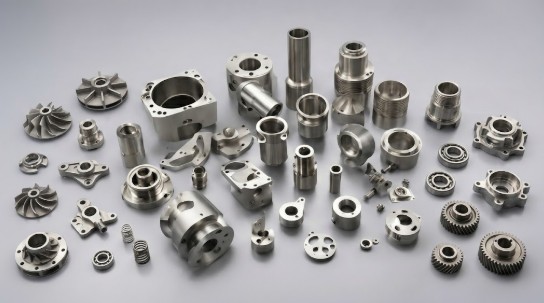
Available manufacturing processes include:
- CNC Machining: Milling and turning produce precise metal and plastic components with controlled dimensions and detailed features.
- Injection Molding: Suitable for creating plastic components through prototype tooling and larger production runs.
- Sheet Metal Fabrication: Laser cutting, bending, stamping, punching, spinning, and welding support customized metal structures.
- 3D Printing: Plastic and metal printing create complex geometries without conventional tooling requirements.
- Vacuum Casting: Polyurethane casting produces cost-effective batches of plastic prototypes.
- Custom Extrusion: Aluminum and plastic extrusion create profiles with consistent cross-sectional geometries.
Matching the process to the design helps establish a suitable balance between functionality, manufacturability, and production economics.
3. Evaluating Designs Through Rapid Prototyping
A prototype is a chance to look at a product before deciding on the final manufacturing arrangement. It shows problems that digital models may not identify, such as assembly problems, uncomfortable dimensions, inadequate clearances, and structural weaknesses. These evaluations can be made through rapid prototyping, before the long production preparation.
CNC and 3D printing prove to be very helpful in the initial development phase. Machined prototypes can be made with real materials and provide dimensional accuracy. Printed components enable designers to be more creative when it comes to shape, ergonomic design, and internal structures. Development teams can quickly test some designs with standard lead times beginning at 3 business days for eligible simple parts. The prototypes also serve as a valuable source of data to help improve drawings, tolerances, and manufacturing specifications.
4. Selecting Materials and Finishes for Product Performance
The type of material used influences nearly all of the attributes of a finished part. Whether a material is suitable for its intended use depends on its weight, strength, flexibility, thermal resistance, corrosion behaviour, and machinability. Even if the design is good, it may be necessary to change the material being used if it is not able to endure the conditions of use.
More than 100 different metals and plastics are available, allowing flexibility in considering different material options. Aluminium construction is light, and stainless steel construction is strong and corrosion-resistant. Engineering plastics are used in situations where electrical insulation, lightweight properties, or specific chemical characteristics are desired.
Surface finishing also has an impact on the performance and appearance of components. More than 50 different finishes are offered, meeting a range of functional and aesthetic needs. These treatments may enhance surface properties, impart protective qualities, or ensure uniformity in parts when they are assembled. Material and finish choice should therefore take into account real operational conditions and not appearance only.
5. Moving From Prototypes to Small-Batch Production
After initial validation, the next hurdle of a design is the ability to make it repeatable. The production of prototypes is different than the production of hundreds of the same part. The production adds more factors to consider, such as process consistency, tooling costs, inspection process, and part variations.
Low-volume manufacturing is a middle-ground between one-offs and mass production. Rapid tooling with either aluminum or soft steel molds can support batches of over 100 parts, depending on the components’ requirements and the suitability of the tooling. The method is to give the developers the opportunity to test production quality without putting a lot of money at risk. It also gives a chance to gauge product demand and fine-tune manufacturing arrangements before scaling up production.
6. Understanding Design for Manufacturing Before Production
What is correct in a CAD program may cause problems in the manufacturing process. Thin walls, unnecessary features, sharp internal corners, limited tool access, and inappropriate tolerances can add to production complexity. Design for Manufacturing (DFM) is used to tackle these concerns prior to components going into production.
Engineering reviews look for opportunities to simplify geometry while maintaining essential functionality. When designing a part for CNC machining, designers can adjust internal radii for the available cutting tool. For injection molded parts, correct wall thickness, draft, and material flow should be considered. Appropriate bend allowances and spacing are also advantages for sheet metal designs.
These changes help to minimize unnecessary manufacturing issues and maintain consistent component quality. Design for Manufacture (DFM) feedback can also be given early in the development process to help developers understand the implications of design decisions on production costs and tolerances.
7. Maintaining Quality Throughout the Manufacturing Process
Choosing cutting-edge equipment is not enough for accurate manufacturing. The verification of materials, dimension inspection, process control, and documentation for consistency all lead to reliable results. Even a well-designed component can have variations in production if it is not accompanied by proper quality procedures.
An ISO 9001:2015 certified manufacturing system sets up systematic quality management procedures. Measuring and testing equipment is used in-house to check if materials and finished parts are up to the required standard. First Article Inspection (FAI) is an extra verification step that checks initial production parts prior to going into full production.
With experience since 2010 and over 30 thousand delivered projects, 3ERP is a combination of manufacturing facilities and verified production partners. This setup provides flexibility for various project needs, ensuring adherence to specifications and production consistency.
8. Turning Product Development Into a Continuous Process
Custom manufacturing is best if the developers think about each stage of the production as a continuous development process. Prototypes show design restrictions, small production series allow a look at repeatability, and material evaluations allow a determination of performance requirements. The information that is fed back from each stage helps to make better manufacturing decisions for the next stage.
This progression is easier to manage thanks to a straightforward ordering process. With the ability to upload compatible CAD files such as STEP, IGES, STL, and SLDPRT, engineers can see component geometry. Customers can then receive the quotations and design feedback before confirming the details of production. After approval, the manufacturing, inspection, packaging, and shipping process is followed.
Conclusion
The process of making product ideas a reality involves synergistic decisions to be made in relation to design, materials, manufacturing processes, and quality. Custom part services bridge the gap between the two: making physical development more accessible and production more adaptable. Whether you are working on a prototype, low-volume manufacturing, or a greater production volume, having the proper capabilities can help bring your digital ideas to life and make them functional. 3ERP offers a practical manufacturing pathway to make product concepts a reality, with multiple manufacturing processes, a vast array of material options, engineering support, and quality procedures in place.