
Down vs Sherpa: Understanding Two Very Different Kinds of Warmth
Walk through any clothing store in late autumn and two textures stand out. One is the smooth, quilted surface of down-filled outerwear, puffed into neat channels. The other is the soft, curly pile of sherpa, the fabric that looks and feels a little like a sheep’s fleece. Both promise warmth, yet they deliver it in completely different ways.
For shoppers, the difference affects comfort, weather protection and how a garment fits into daily life. For retailers and bulk buyers, it affects what to stock, how to explain products to customers and which items will sell in a given climate.
This article explains how each material works, where each performs best and what buyers should consider when deciding how much of each belongs in a cold-weather range.
How Down Keeps People Warm
The Structure of Down
Down is the soft undercoating found beneath the outer feathers of ducks and geese. Each cluster has fine filaments branching out from a central point. These filaments interlock loosely, creating thousands of tiny air pockets.
Trapped Air, Not Heat
Down does not generate warmth. It slows the loss of body heat by trapping still air close to the body. The more air a fill can hold, the warmer the garment feels for its weight.
Fill Power and Fill Weight
Fill power describes how much space a given amount of down occupies. Higher numbers indicate loftier, more efficient down. Fill weight describes how much down is in the garment. A jacket’s warmth depends on both.
Where Down Excels
Down offers outstanding warmth for very little weight and compresses into a small space. That makes it ideal for very cold, dry conditions, travel and anyone who wants serious warmth without bulk. Retailers in colder regions often build their winter outerwear around wholesale Down Jacket styles because customers there need high warmth that still feels light enough for daily commuting.
Where Down Struggles
When down gets wet, the clusters collapse and lose much of their ability to trap air. Some down is treated to resist moisture, and shell fabrics help, but heavy rain remains a challenge. Down garments also need gentle washing and thorough drying.
How Sherpa Keeps People Warm
What Sherpa Actually Is
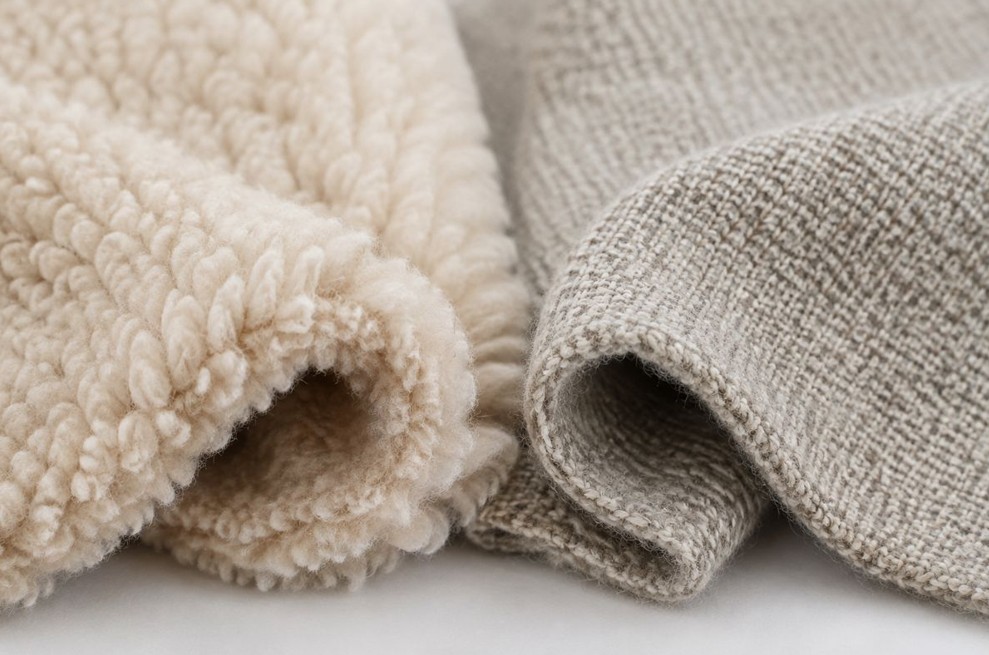
Despite the name, most sherpa used in modern clothing is a synthetic fleece, usually polyester, made to imitate the look and feel of sheepskin. One side is often smooth and knitted, while the other has a deep, curly pile.
Warmth Through Pile
The thick, textured pile traps air in a similar way to wool. Sherpa feels warm immediately when it touches the skin, which is part of its appeal as a lining.
Where Sherpa Excels
Sherpa is comfortable, breathable and forgiving. It handles light dampness better than untreated down, dries relatively quickly and is easy to care for. It works well as a lining in denim, canvas and corduroy jackets, and as the main fabric in casual zip-ups and pullovers.
Where Sherpa Struggles
Sherpa is heavier and bulkier than down for the same warmth, and the pile can let wind through unless it is paired with a wind-resistant outer layer. Over time, cheaper pile may mat or flatten.
Comparing the Two in Real Situations
Daily Commuting in Cold, Dry Cities
A down-filled coat usually wins here. It provides strong warmth with minimal weight and packs neatly when stepping onto heated trains.
Cool, Damp Autumn Days
A sherpa-lined jacket with a durable shell is often more practical. It handles mild dampness and feels cozy without overheating.
Outdoor Work and Rugged Use
Sherpa-lined canvas and denim jackets have long been popular for outdoor work because they tolerate rough handling and do not require delicate care.
Casual Style and Layering
Sherpa has become a fashion texture in its own right. Collars, cuffs and full sherpa fronts give jackets a relaxed, comfortable look. Boutiques and campus stores frequently add wholesale Sherpa Jacket options to their autumn range because the style appeals to younger shoppers and works for weather that is cool rather than truly cold.
When the Two Work Together
Down and sherpa are not always competitors. Some of the most practical cold-weather garments combine them. A down-filled body with a sherpa-lined hood or collar gives strong insulation where it matters most and a soft, warm feel around the face and neck. Sherpa-lined vests can also be worn under a light down layer on very cold days, creating a flexible system that can be adjusted as conditions change.
For customers, understanding this layering approach can be more useful than choosing one material over the other. A shopper who already owns a warm down coat may get more value from a sherpa piece for milder days than from a second heavy coat. Retail staff who explain these combinations often help customers build a more complete and versatile winter wardrobe.
What Retailers and Buyers Should Weigh
Local Climate
Stores in regions with harsh winters may lean more heavily on down-filled outerwear. Milder or damper regions may sell more sherpa-lined and fleece pieces.
Customer Expectations
Customers buying down often ask about fill power, water resistance and packability. Customers looking at sherpa care more about softness, style and how the jacket looks with everyday outfits.
Care and Returns
Down requires more careful washing, so clear care information helps reduce problems. Sherpa is easier to maintain, which can be a selling point for families and uniform buyers.
Ethical and Sourcing Questions
Some customers want to know how down is sourced. Responsible sourcing standards exist, and clear labeling builds trust. Others prefer synthetic options such as sherpa for animal welfare reasons.
Price Positioning
Down outerwear generally sits at a higher price point. Sherpa pieces can fill the mid-range and give customers an affordable route into seasonal outerwear.
Common Misunderstandings
Thicker Always Means Warmer
A thick sherpa jacket may feel substantial but can still be less warm than a thinner, high-quality down coat.
Sherpa Is Real Sheepskin
Most sherpa in everyday clothing is synthetic. Genuine shearling is a different, more expensive material.
Down Is Useless in Rain
Down performs poorly when soaked, but a good shell and water-resistant treatment make it suitable for many wet-weather commutes.
Conclusion
Down and sherpa both keep people warm, but they do it in distinct ways. Down traps air in a light, compressible structure that delivers exceptional warmth for its weight, especially in cold, dry conditions. Sherpa uses a soft, deep pile that feels cozy, handles light dampness and suits casual and rugged wear.
For shoppers, the right choice depends on climate, activities and style. For retailers and buyers, stocking a sensible mix of both, and explaining the difference clearly, helps customers leave with outerwear that actually suits how they live.
FAQs
Q1: Is down warmer than sherpa?
For the same weight, down is usually warmer. Sherpa needs more material to reach a similar level of warmth.
Q2: Is sherpa good for very cold weather?
Sherpa works well in cool to moderately cold conditions, especially as a lining. In very cold weather, it is often combined with insulation or worn under a heavier coat.
Q3: Can down jackets be worn in the rain?
Light rain is usually fine if the shell is water-resistant, but heavy or prolonged rain can reduce down’s warmth.
Q4: How should sherpa be washed?
Wash in cool water on a gentle cycle and air dry or tumble dry on low heat to keep the pile soft.
Q5: Which sells better for retailers?
It depends on the climate and customers. Colder regions often favor down, while milder areas and fashion-focused stores sell more sherpa.