

Why Switching Strategies After Every Result Can Build False Confidence in GameZone Color Game
Frequent strategy changes in GameZone Color Game can feel like active “reading” of the table. A red outcome shows up, so a player moves to blue. Blue lands next, so the choice flips again. When one of those quick switches happens to match the next result, the adjustment can feel like proof of skill—creating confidence that may not be supported by real predictive evidence.
Coverage of decision-making has long noted a key gap between changing a choice and having a defensible reason that the change predicts future outcomes. Studies discussed in gambling and behavioral research suggest that prior wins and losses can influence later selections even in tasks designed to remain unpredictable.
Quick Answer
Rapidly changing your pick after every GameZone Color Game result can inflate confidence because a “successful switch” feels like confirmation of a method. Previous outcomes, however, describe only what already happened. Constant adaptation can turn random sequences into perceived signals, encouraging stronger decisions without stronger evidence.
Why Constant Switching Feels Like a Real Strategy
A short run of the same color can trigger competing interpretations. While watching several rounds, a player may notice red appearing often and decide:
- “Red is showing too much—switch away.”
- “Red is hot—stay with it.”
Both reactions attempt to extract meaning from the same streak. The confidence problem begins when the mind treats recent outcomes as guidance rather than history.
Behavioral research using randomized guessing tasks has reported that strings of wins or losses can affect what people choose next, even when outcomes are not predictable. In gambling research, similar themes show up through commonly discussed cognitive distortions such as gambler’s fallacy, overconfidence, trend-based selections, the influence of other players’ wins, and the illusion of control.
Not every change of mind needs to be irrational for false confidence to appear. A switch can feel “smart” simply because the next result happens to agree with it.
The Confidence Spike After a Switch “Works”
Consider Carlo, an illustrative player. He picks red and loses. For the next round, he moves to blue because blue seems less common in the most recent sequence. The next outcome lands on blue.
A quick conclusion can form: Carlo “read” the results correctly. Yet the round proves only one thing—blue appeared after he chose blue. It doesn’t prove that switching made blue more likely.
That distinction often gets lost because correct guesses feel more memorable than the reasoning behind them. Research on decision-making after repeated wins and losses helps explain why: earlier outcomes can shape later choices even when uncertainty remains unchanged.
Practical tip: evaluate the reason, not only the result.
Before switching, complete this sentence:
“I am changing because _______.”
If the answer is mainly “because the last color appeared several times,” the decision may be reacting to a sequence rather than using truly predictive information.
Why Losses Can Trigger Even More Switching
False confidence doesn’t develop only after a win. A loss can also intensify switching.
A player moves from blue to yellow and loses. Instead of questioning the assumption behind the switch, the player may decide the timing was wrong and change again. The loop can look like:
Switch → Lose → Switch again → Lose → Search for another pattern
The player may feel increasingly engaged—constantly updating, revising, and “figuring it out”—while actually becoming more reactive to each new outcome. Gambling-cognition discussions often link this reactivity to distortions such as gambler’s fallacy and the belief that sequences reveal control or meaning.
Frequent switching can also contribute to decision fatigue. When every result demands a new adjustment, careful evaluation can fade and impulse can take over.
What GameZone Color Game Results Can (and Can’t) Tell You
GameZone’s Color Game guide describes a format using three dice and six colors: yellow, white, pink, blue, red, and green (as of October 2026). The same guide explains that the Roadmap tracks recent outcomes and color frequencies across the last 100 rounds.
That Roadmap can help summarize what has already occurred. It does not automatically create a forecast.
GameZone’s guidance also frames each new round as an independently generated RNG result and warns against treating visible historical patterns as reliable predictions. A clear difference emerges:
- Observation: Red appeared multiple times recently.
- Assumption: Red appeared too often, so another color must be next.
The first line records history. The second turns history into a prediction. For readers searching “how to win color game” or “how to win in color game,” that separation matters more than complicated switching systems built on short streaks.
Why “Hot” and “Due” Narratives Both Mislead
A streak can produce two opposite stories. One player may label a color “hot” and expect it to continue. Another may decide the same color is “due” to stop. Both beliefs start from the same observation and can feel equally convincing.
A 2025 field study of baccarat covering more than 17 million games reported that bettors often followed streaks, increasingly matching future bets to consecutive past outcomes as streaks grew longer. The researchers also noted that behavior depends on the structure of a specific game, so such results shouldn’t be treated as direct proof about GameZone Color Game. Still, the finding supports a familiar theme in gambling coverage: streaks can change behavior even when streaks do not provide reliable prediction.
A More Controlled Response to Each Result
- Same color repeats: “It must continue” → treat as history, not instruction
- Same color repeats: “It must stop soon” → avoid “due” thinking
- A switch wins: “My system works” → separate outcome from reasoning
- A switch loses: “I need a new system” → reassess whether the assumption was predictive
- A pattern seems clear: “Now I see it” → ask what evidence actually supports it
The aim isn’t banning strategy changes. The focus is preventing every new result from becoming an automatic command.
When Switching Turns Into Chasing
Strategy changes become riskier when they connect to loss recovery. An illustrative player may lose several rounds, keep rotating colors, then raise bet size because the newest pick “has to work.” The issue shifts from strategy into urgency and spending.
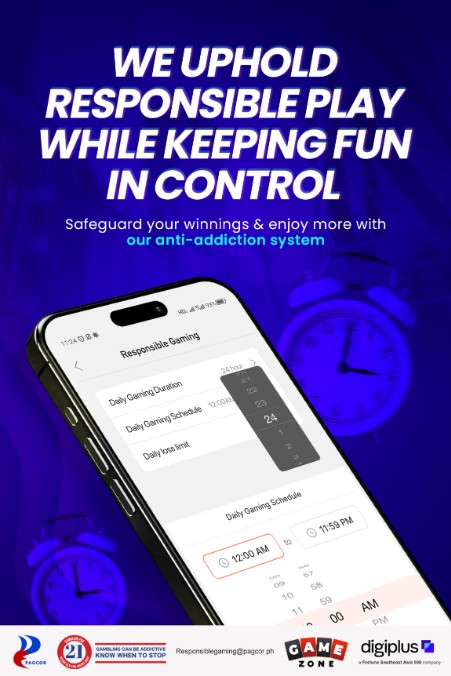
PAGCOR guidance commonly emphasizes that gambling is not a source of income, recommends time and money limits, warns against borrowing, and advises avoiding chasing losses. PAGCOR also offers self-exclusion options for those seeking a formal break.
GameZone Eligibility and Verified Access Notes
PAGCOR’s January 29, 2026 registry lists Gamezone under Total Gamezone Xtreme Incorporated, naming gamezone.ph as the main domain and gzone.ph among additional URLs. PAGCOR’s March 19, 2026 approved-games list includes Color Game with Lightning Bonus Feature under GameZone specialty games and classifies it as a live dealer table game.
GameZone Terms of Use restrict access to qualified individuals 21 and above. For iPhone users, the Philippine App Store listing for GameZone – #1 Tongits Platform identifies DigiPlus as the developer and requires iOS 15.0 or later, with a 21+ note in the description. Verification through official sources can reduce risks tied to unfamiliar APKs or third-party download pages.
FAQ
What is Color Game?
A chance-based game where players select colors and three dice determine the result; GameZone lists six colors: yellow, white, pink, blue, red, and green.
Can previous Color Game results predict the next round?
Roadmap history summarizes past results, while GameZone guidance warns against treating visible patterns as reliable predictions for RNG-based rounds.
Is GameZone available to players under 21?
GameZone Terms of Use restrict registration and online gaming to qualified individuals aged 21 and above.